
“Pay in 4 interest-free payments” is now offered at almost every online checkout — and it’s one of the fastest-growing ways people spend money. Buy Now, Pay Later can genuinely be interest-free, which sounds like a free lunch. Here’s how it actually works, how the companies make money, and the traps worth knowing about.
Key takeaways
- BNPL lets you split a purchase into instalments, often with no interest if you pay on time.
- It’s not free money — the companies profit from merchant fees, late fees and longer paid plans.
- The real risks are late fees, overspending, and juggling multiple plans at once.
- Missed payments can hurt your finances and, increasingly, your credit.
What BNPL actually is
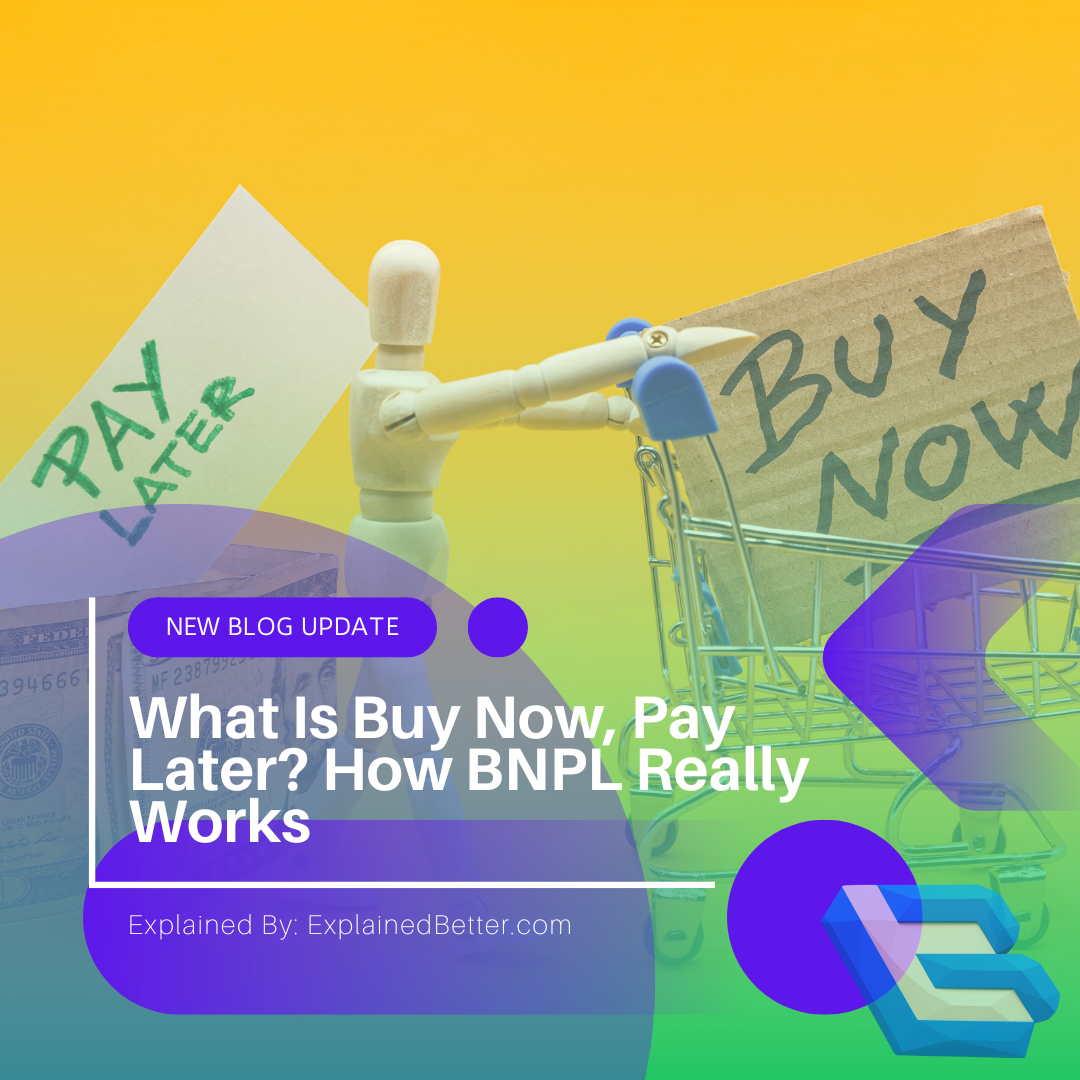
Buy Now, Pay Later is a short-term financing option that splits a purchase into several smaller payments. The classic version is “pay in 4”: you pay 25% at checkout and the rest in three instalments, typically every two weeks, with no interest if you pay on schedule.
It feels different from a credit card — quick to sign up for at checkout, with a fixed, visible repayment plan rather than a revolving balance. But make no mistake: it is still borrowing. You’re receiving goods now and owing money later, which is the definition of credit, however friendly the interface looks.
How it works at checkout
- You choose BNPL at checkoutInstead of paying in full, you pick a provider (there are several) offering to split the cost.
- A quick approval checkThe provider runs a fast eligibility check — often a “soft” check that doesn’t affect your credit — and approves you in seconds.
- You pay the first instalmentUsually a quarter of the total is taken immediately, and you walk away with the goods.
- The rest is auto-chargedThe remaining payments are automatically taken from your linked card or bank account on set dates. If they all clear on time, you pay no interest.
If it’s interest-free, how do they make money?
This is the key question, and there are three main answers. Understanding them shows why BNPL exists and where the catches are.
- Merchant feesThe biggest source. Shops pay the BNPL company a fee for each sale — often more than they’d pay on a card — because offering instalments demonstrably increases how much people buy. The retailer trades a cut of the sale for more and bigger orders.
- Late feesMiss a payment and you’re typically charged a late fee. For the “interest-free” plans, this is a major revenue stream — the model quietly relies on a share of users slipping up.
- Interest on longer plansBeyond “pay in 4,” providers also offer longer financing for bigger purchases — and those do usually charge interest, sometimes at high rates. The interest-free short plan is often the entry point to interest-bearing ones.
The real risks
BNPL isn’t inherently bad — used carefully for something you’d have bought anyway, an interest-free split can be genuinely useful. The problems come from how easy it is to misuse.
- Overspending. By making purchases feel smaller, BNPL can encourage buying things you don’t need or can’t comfortably afford.
- Juggling multiple plans. Because each purchase is separate and approval is instant, it’s easy to end up with several plans running at once — and lose track of how much is due and when.
- Late fees and overdrafts. Auto-charges can hit when your account is low, triggering late fees from the provider and overdraft or failed-payment fees from your bank.
- Credit impact. Historically BNPL sat outside the credit system, but that’s changing — more providers are reporting activity to credit bureaus, meaning missed payments can increasingly damage your credit, while responsible use may eventually help it.
- Refund headaches. Returning a BNPL purchase can be more complicated, and you may keep owing instalments while a refund is sorted out.
Using it sensibly
- Only for planned purchases. Treat it as a way to spread the cost of something you’d buy anyway — not a way to afford something you can’t.
- Track every plan. Know exactly how many you have running and when each payment is due.
- Make sure the money’s there. Ensure your linked account will have funds on each auto-charge date to avoid stacked fees.
- Read the longer-plan terms. The interest-free promise usually applies only to the short “pay in 4” option — longer financing can carry steep interest.
The terms, explained
- BNPL
- Buy Now, Pay Later — short-term financing that splits a purchase into instalments, often interest-free if paid on time.
- Pay in 4
- The most common BNPL plan: four equal payments, usually one at checkout and three every two weeks.
- Merchant fee
- The fee a retailer pays the BNPL provider per sale — the model’s main revenue source.
- Soft vs hard credit check
- A soft check doesn’t affect your credit score; a hard check can. Many BNPL sign-ups use a soft check.
- Credit bureau reporting
- Whether the provider reports your payment activity to credit agencies — increasingly common, which means missed payments can hurt your credit.
- Revolving credit
- Credit like a card that you can reuse as you repay. BNPL differs by using a fixed plan for a specific purchase.
Money topics like this are easier to follow with the numbers on screen — our Money video explainers walk through them visually.
Frequently asked questions
Is Buy Now, Pay Later really interest-free?
The standard “pay in 4” plans usually are, if you pay on time. But longer financing plans often charge interest, and late fees apply if you miss a payment. So it can be free — but only under specific conditions you need to meet.
Does BNPL affect my credit score?
Increasingly, yes. Historically it often didn’t, but more providers now report to credit bureaus. That means missed payments can hurt your credit, and responsible use may eventually help — check each provider’s policy.
Is BNPL better than a credit card?
Neither is universally better — it depends on use. BNPL offers a fixed, often interest-free short plan, which can beat carrying a credit-card balance. But cards offer protections and rewards, and BNPL’s ease can encourage overspending. Both are borrowing.
What happens if I miss a BNPL payment?
You’ll typically be charged a late fee, the auto-charge may trigger bank fees if your account is short, and the missed payment could be reported to a credit bureau. Repeated misses can also stop you using the service.